Our Process
Our Production Process
From Single Yarn to Full Yarn
Explore the controlled production stages that help Z.E.N TEX deliver yarn with clean finishing, stable colour, and application-ready performance.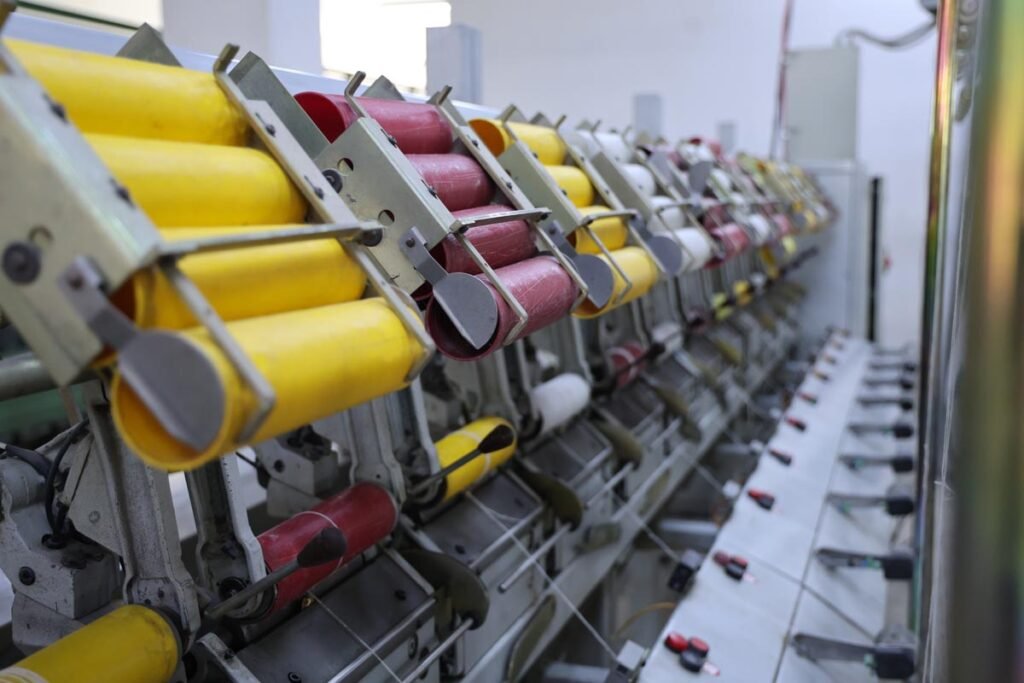
Assembly Winding
Preparing yarn in uniform packages to create a stable and controlled production flow.
Preparing the yarn for a controlled production journey
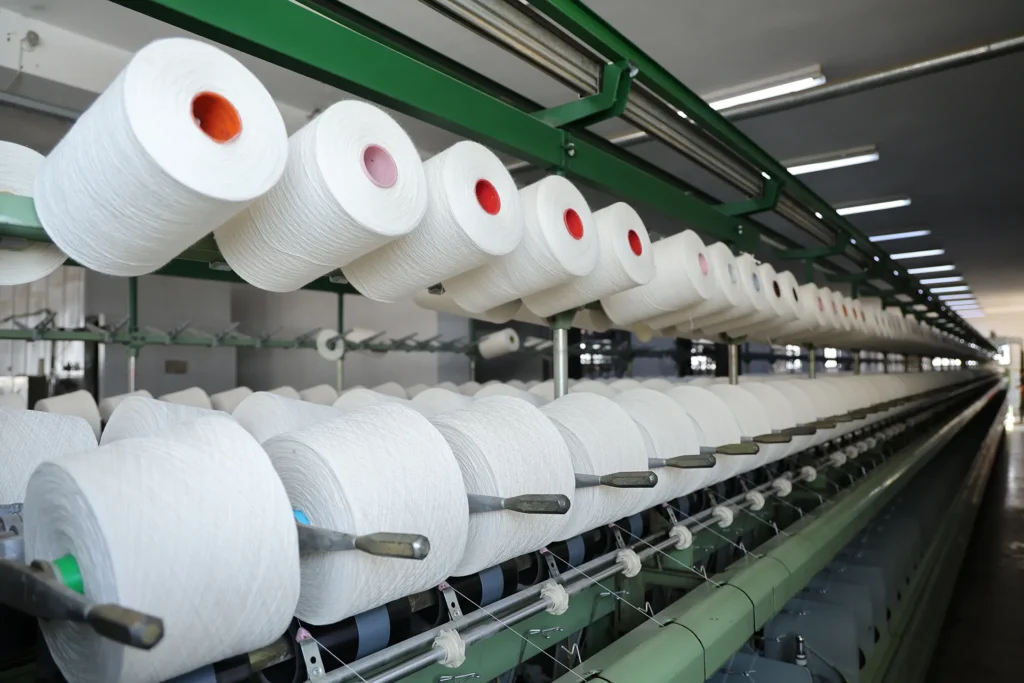
At Z.E.N TEX, production begins by preparing incoming yarn in a format suitable for the next processing stages. The yarn is transferred onto uniform packages while maintaining controlled tension, clean movement, and consistent winding conditions.
This stage is important because a stable package helps the yarn move smoothly through twisting, gassing, reeling, dyeing, drying, and rewinding operations. During winding, the team reviews yarn path, package formation, and tension balance to reduce irregularities before further processing.
The result is a consistent yarn package that supports reliable handling and helps maintain quality throughout the production line.
Twisting
Strengthening yarn structure through controlled twisting for improved stability and performance.
Building strength, structure, and performance into the yarn
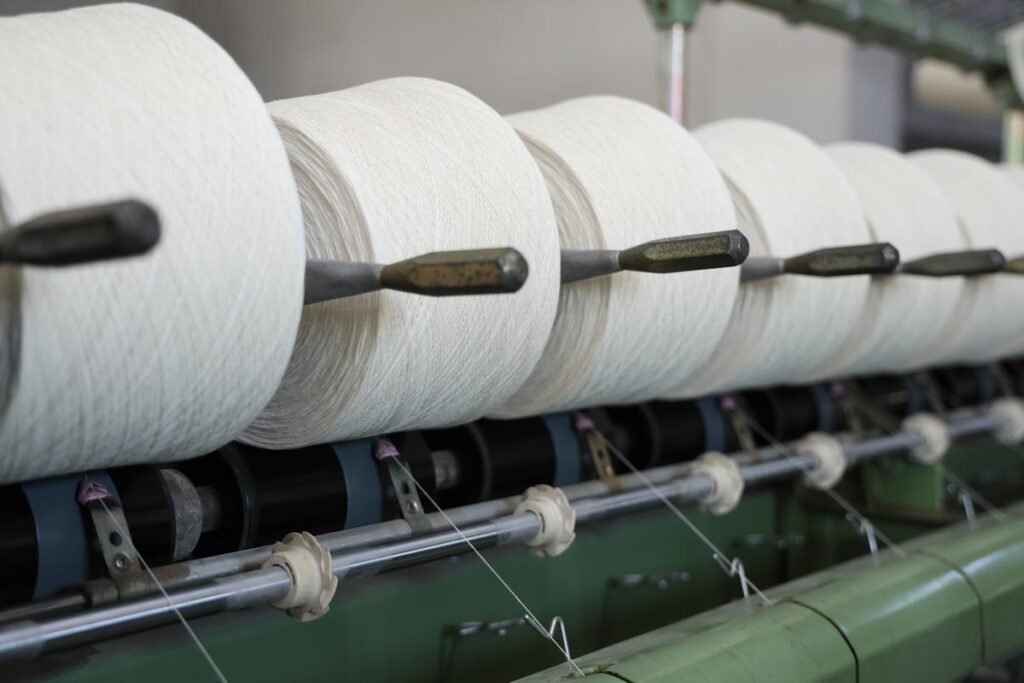
During twisting, yarn strands are combined or tightened according to the required specification. The twist level, direction, and yarn construction are selected based on the intended end use, whether for weaving, knitting, fashion fabrics, or other textile applications.
Our process focuses on maintaining controlled tension and uniform twist distribution along the yarn length. This helps improve yarn cohesion, structure, and resistance to separation during later processing and use.
By applying the right twist for the required application, we create yarns that are more stable, more consistent, and better prepared for downstream textile production.
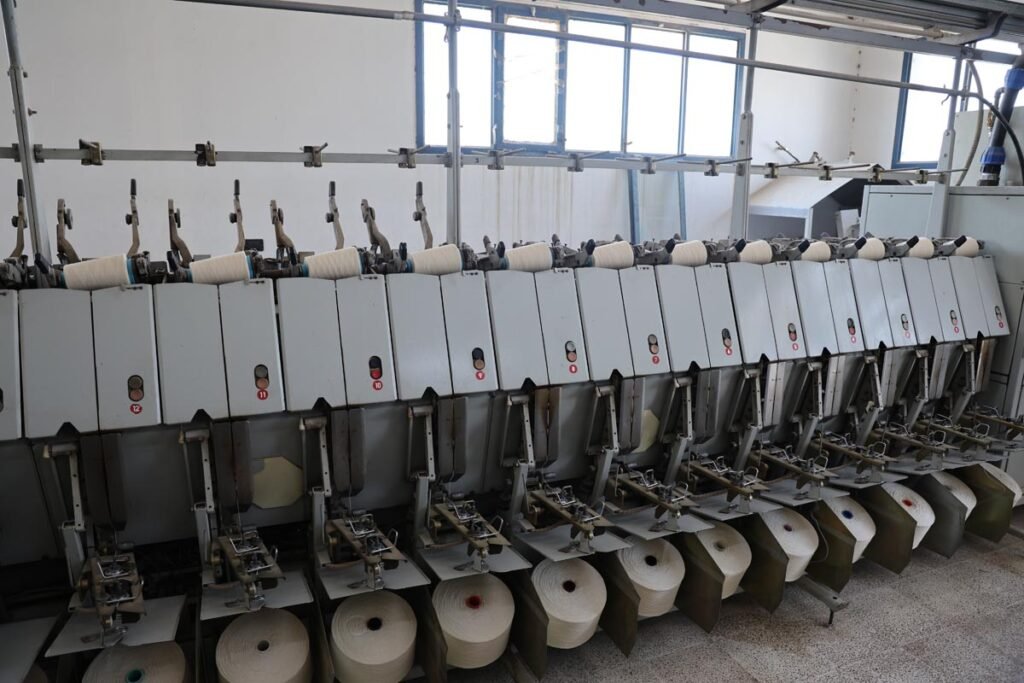
Gassing
Removing loose surface fibres to achieve a cleaner, smoother yarn finish.
Refining the yarn surface for a cleaner finish
Gassing is used to reduce loose fibres and surface fuzz that may appear along the yarn. The yarn passes through a carefully controlled treatment zone, where fine protruding fibres are removed without compromising the integrity of the yarn itself.
This process helps create a smoother yarn surface and a more refined visual finish. It can also support improved performance in later operations by reducing excessive hairiness and helping the yarn run more cleanly through textile machinery.
The result is a cleaner, smoother yarn with a more premium appearance and improved readiness for finishing or dyeing.
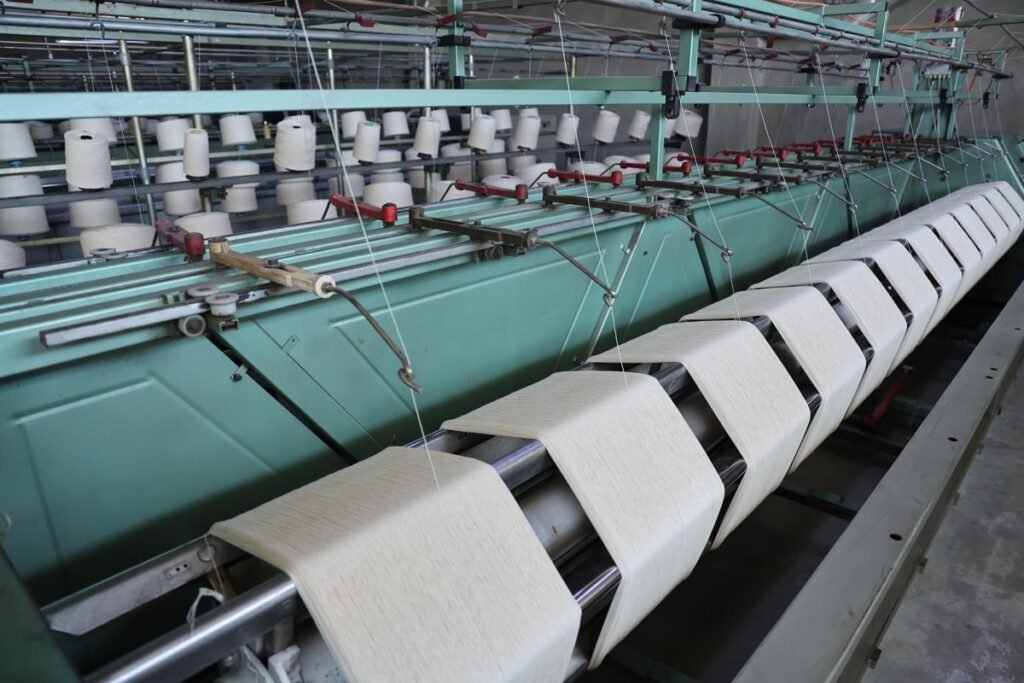
Reeling
Converting yarn into hanks to support uniform treatment in the next production stages.
Preparing uniform hanks for even treatment
After the yarn has been prepared, it is wound into hanks through a controlled reeling process. The objective is to create a uniform form that allows the yarn to be treated evenly during the next stages of production.
Careful control of winding length, tension, and hank formation helps ensure that the yarn remains organised and accessible during wet processing. This is especially important for processes such as mercerizing and dyeing, where consistent exposure is essential.
By creating well-formed hanks, we help support more uniform treatment, better colour penetration, and a more dependable final result.
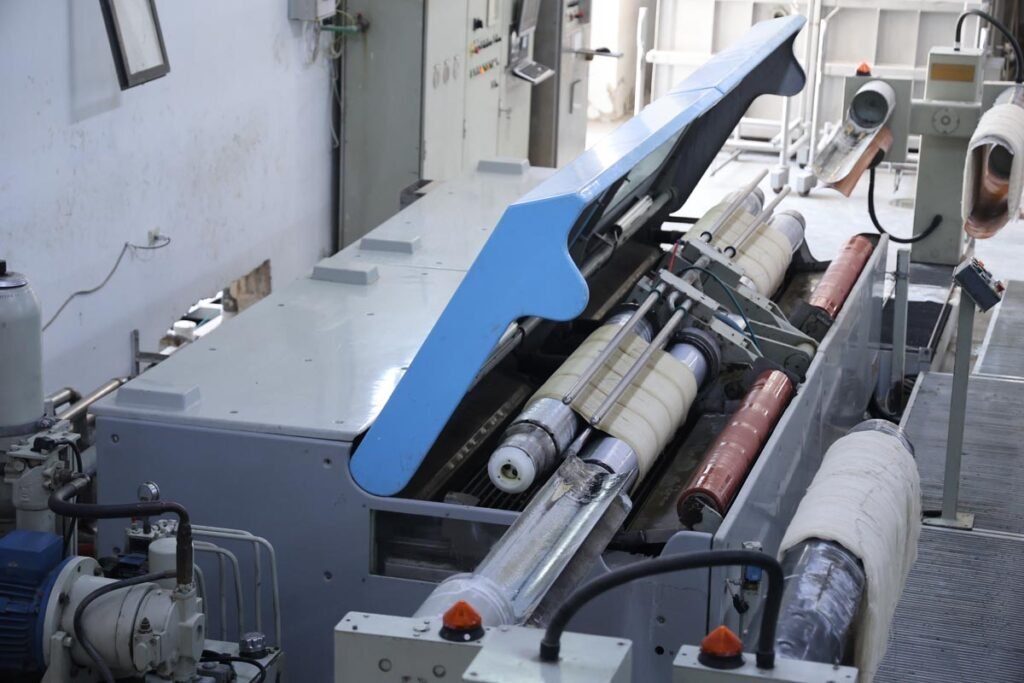
Mercerizing
Enhancing yarn quality, appearance, and dye affinity through specialised treatment.
Enhancing yarn quality where the specification requires it
For suitable yarn types and customer specifications, mercerizing is used as a specialised treatment to improve the yarn’s performance and appearance. The yarn is processed under carefully managed conditions to support better strength, surface smoothness, lustre, and dye absorption.
Throughout the treatment, process conditions are monitored to maintain consistency and protect the yarn’s structure. The yarn is then thoroughly washed and prepared for the next stage of production.
Mercerizing helps create a yarn with a more refined finish and stronger colour response, making it especially valuable for premium textile and fashion applications.
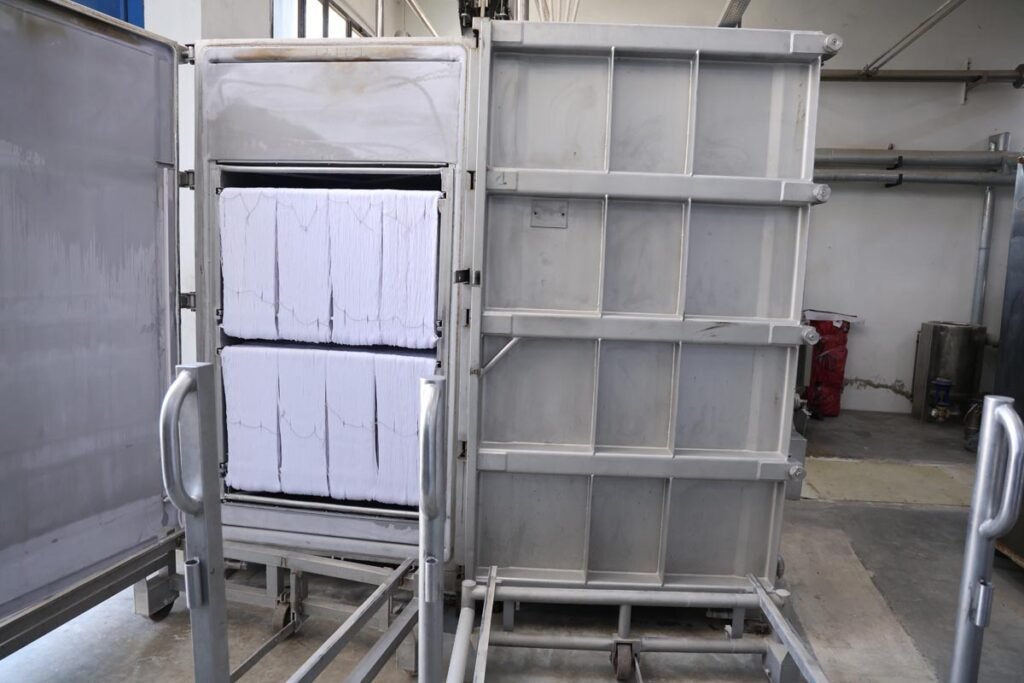
Dyeing
Applying precise colour solutions for consistent, vibrant, and dependable results.
Turning colour specifications into consistent yarn results
Dyeing is one of the most important stages in the Z.E.N TEX process. Each order begins with the required colour reference, shade target, yarn specification, and end-use requirements.
The yarn is processed using carefully prepared dyeing parameters to achieve the intended shade as consistently as possible. During the process, attention is given to colour development, bath control, yarn movement, and treatment time so that colour reaches the yarn evenly.
After dyeing, the yarn is treated and rinsed as required to support colour stability and surface quality. The result is a dyed yarn developed to meet the visual identity and production needs of each customer.
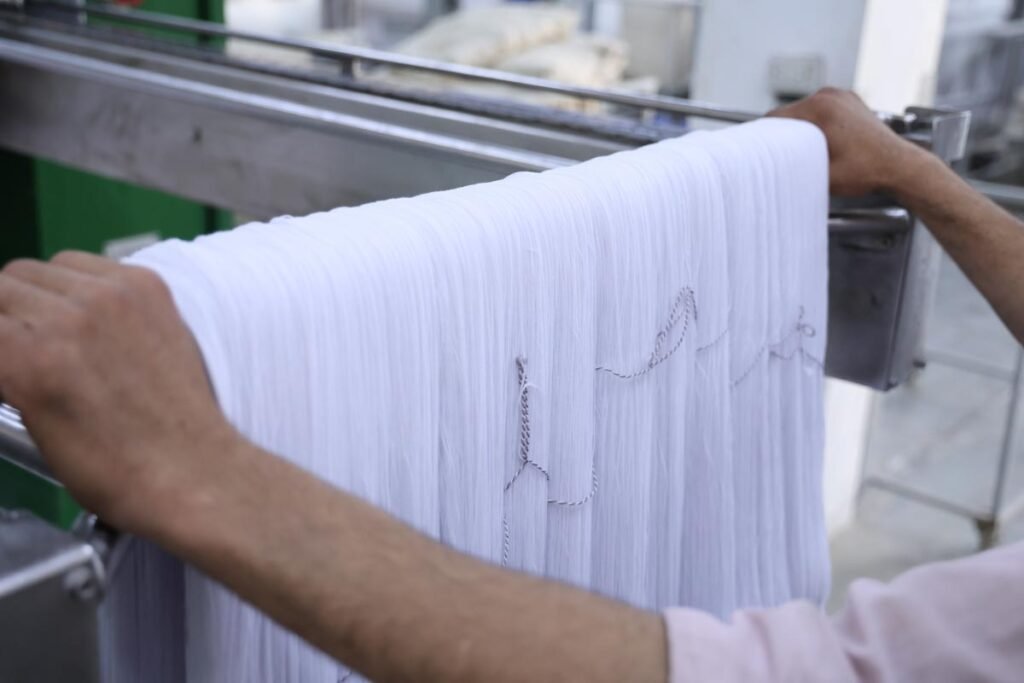
Drying
Controlled drying to stabilise the yarn after wet processing and prepare it for the next stage.
Stabilising the yarn after wet processing
Once wet processing and dyeing are complete, the yarn enters the drying stage. Moisture is removed under controlled conditions to help preserve yarn structure, colour quality, and readiness for the next operation.
The drying process is carefully managed to avoid unnecessary stress on the yarn. Balanced airflow, temperature, and handling conditions help ensure that the yarn dries evenly and maintains its intended characteristics.
This stage prepares the yarn for conversion from hanks into cones, while helping retain the colour and finish achieved during processing.
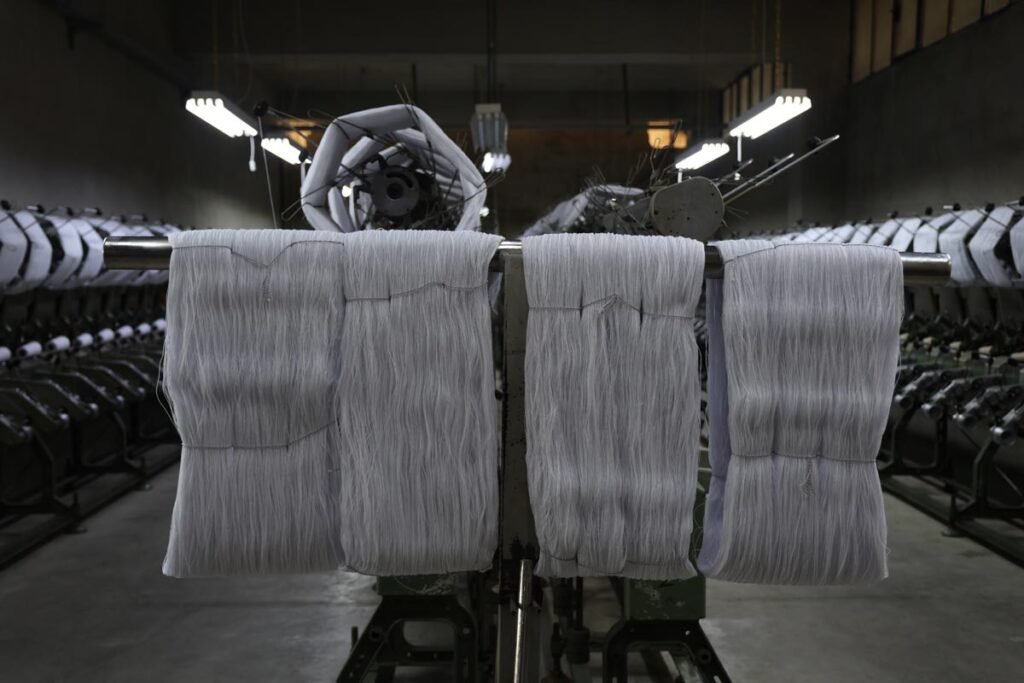
Hank to Cone
Transferring treated yarn from hanks into production-ready cones with controlled tension.
Converting treated yarn into production-ready cones
After the yarn has completed its wet-processing stages, it is transferred from hanks onto cones. This conversion makes the yarn easier to store, transport, and use in industrial weaving and knitting operations.
The yarn is wound onto cones with close attention to tension, package density, and winding consistency. A well-formed cone supports smooth yarn withdrawal during customer production and helps reduce interruptions during use.
This stage transforms the treated yarn into a practical, organised package ready for the final refinement and inspection process.
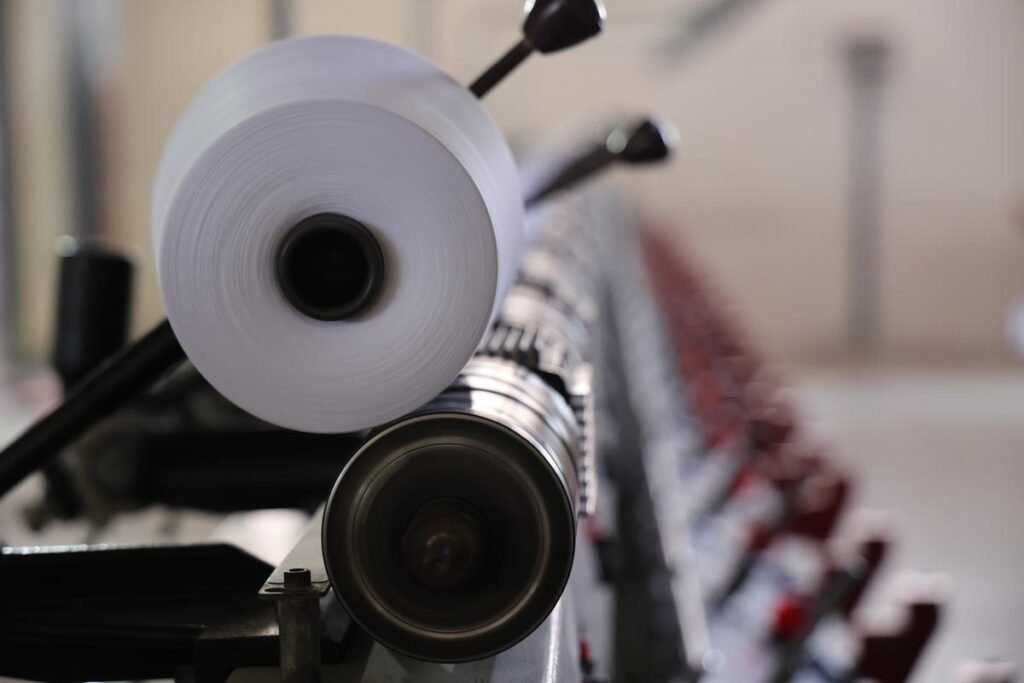
Rewinding
Refining package formation and preparing clean, consistent cones for final inspection.
Refining every cone before final delivery
Rewinding is the final yarn-handling stage before packing. Each cone is reviewed and rewound where needed to improve package quality, remove visible irregularities, and ensure a clean, uniform presentation.
The process helps refine cone shape and winding consistency, while also supporting the removal of yarn sections that may not meet the required condition. This creates a more reliable package for downstream manufacturing.
By the end of rewinding, each cone is prepared to meet the required handling and appearance standards before final quality inspection and packing.
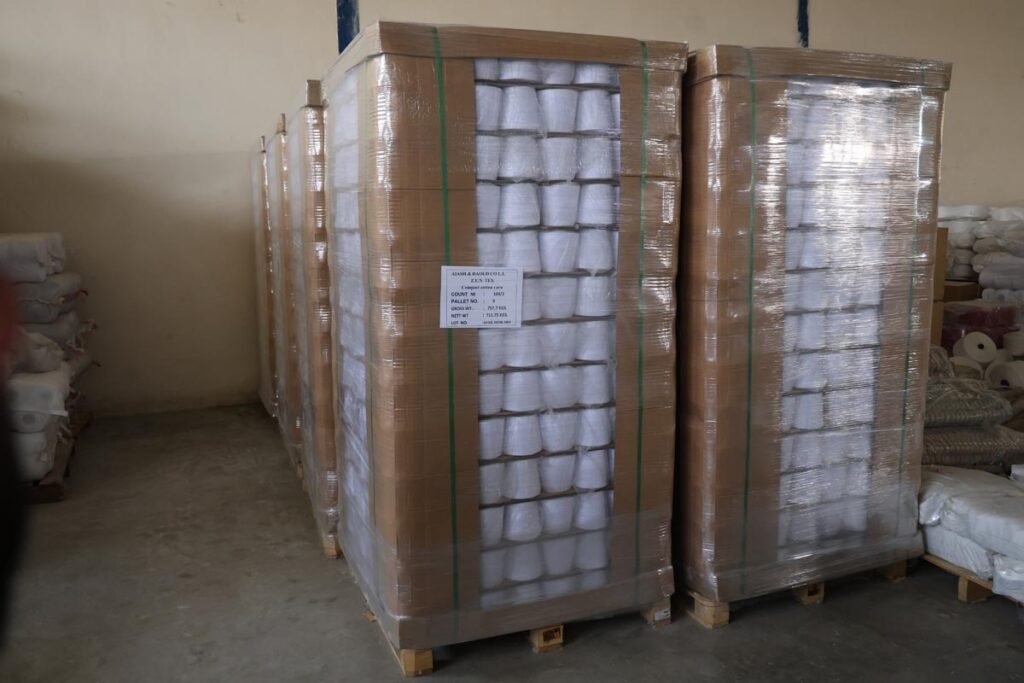
Packing
Protecting finished yarn through organised packing prepared for safe delivery.
Protecting the finished product through organised packing
Once the yarn has passed final inspection, cones are prepared for packing according to the order requirements. Packaging is designed to protect the yarn during storage, handling, loading, and transportation.
Each order is organised to support traceability and efficient delivery. Product details, quantities, and packaging arrangements are checked before dispatch to help ensure that the correct yarn reaches the customer in the correct condition.
The final result is a well-protected shipment prepared for reliable delivery to textile, knitting, and fashion manufacturing customers.
Our Product
Z.E.N TEX Premium Yarn
Premium yarn solutions developed for colour accuracy, clean finishing, reliable strength, and consistent textile performance.
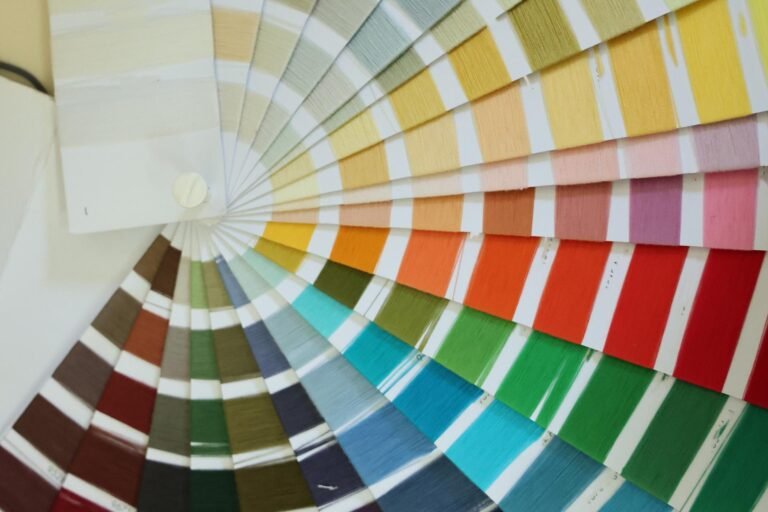
Custom Dyeing
Accurate shade development with controlled depth, clarity, and repeatable results.

Optical Whiteness
Clean, bright yarn finishes for crisp and refined textile applications.
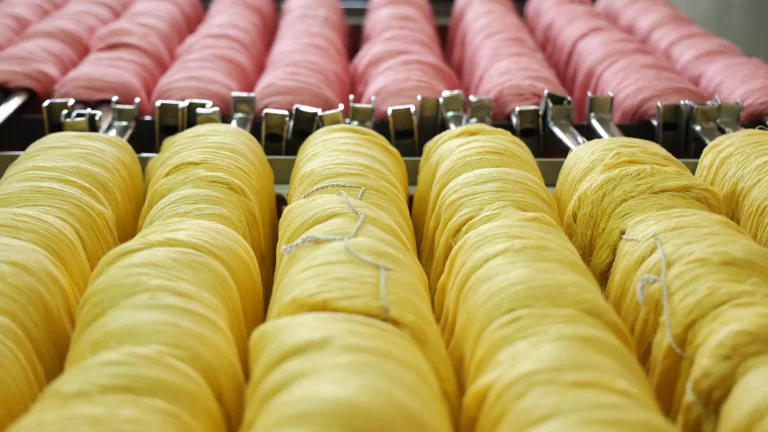
Colour Consistency
Reliable colour uniformity across samples, batches, and repeat orders.
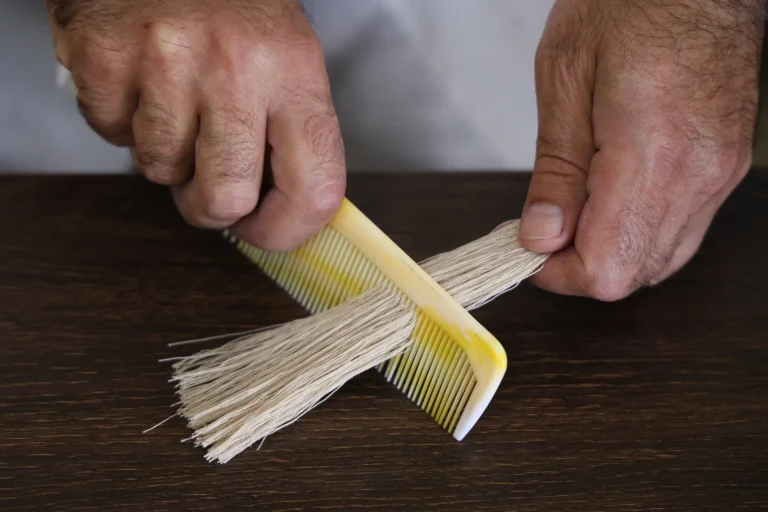
Strength & Reliability
Stable yarn performance prepared for weaving, knitting, and further production.